
Washington DC is a wonderful city to visit and cram in a lot of history with a homeschool / travel year. We made a quick trip to DC for 5 days in February 2023 in order to immerse the kids in American History.
Traveling to Washington DC can be an excellent choice for travel with kids and is a wonderful city for homeschoolers. There are a number of benefits to visiting the nation’s capital, including access to numerous museums, visiting memorials and historical landmarks, in depth tours and opportunities to explore the city’s rich history. The Smithsonian museums and governmental offices offer free admission and a variety of activities, lectures, and workshops that are great for homeschoolers looking to expand their knowledge. Visiting the various memorials, the Washington Monument, and the White House are great ways to learn about the country’s history and government.
There are also many other sites, such as the Smithsonian National Zoo, the National Mall, and the United States Capitol, that can offer homeschoolers a chance to explore the city and its many attractions. Traveling to Washington DC can be a great way for homeschoolers to connect with other students and learn about different cultures. There are many cultural and educational programs available in the city, as well as a variety of festivals and events that can be a great way for students to meet people and learn about different cultures.
Brief Washington DC History
Washington, D.C. has a rich history dating back to its founding as the capital of the United States in 1790. The city was designed by French architect Pierre Charles L’Enfant and was named after the first U.S. president, George Washington. During the Civil War, the city was occupied by Confederate forces, but was quickly recaptured by Union forces in early 1865. Washington, D.C. experienced significant growth and development in the late 19th and early 20th centuries, with the construction of many of the city’s iconic landmarks, including the Lincoln Memorial, the Washington Monument, and the U.S. Capitol building. The city played a central role in the Civil Rights Movement of the 1960s and is home to numerous museums and monuments dedicated to the nation’s history and cultural heritage. Today, Washington, D.C. is a vibrant and dynamic city, serving as the political center of the United States and a popular tourist destination for millions of visitors each year.
Our Washington DC Trip Summary
Where: Washington DC
When: Winter – early February, During a quick cold snap
How we got there: Flying discount on Spirit from Pensacola via Orlando (with a 3 day stopover in Orlando) Flight cost ? per person with $40? to check one bag and about $10 per person to pick seats together.
Transportation from Airport: About $60 Lyft/Uber from Baltimore to Washington DC,
Lodging: Holiday Inn Capital (highly recommend),
Food: Combination of using restaurants onsite, food trucks, museum cafeteria’s and food courts. Food costs were one of the more expensive items
Things to Do: So many free high quality activities, paid for Spy Museum Only (About $90)
Our Washington DC 5 Day Trip Itinerary with Kids
Day 1: Land in Baltimore on Spirit Airlines, Uber to Hotel (about an hour), Stayed at Holiday Inn Capital Hill
Day 2: Smithsonian National Museum of American History (lunch at the museum), Smithsonian National Museum of Natural History
Day 3: Library of Congress, National Gallery of Art (lunch), Smithsonian National Air and Space Museum
Day 4: Monument Walk with bus ride back
Day 5: Spy Museum, Hirshhorn Museum
Traveling to Washington DC with Kids – Tips
How to get to Washington DC
Washington, D.C. is well-connected by various modes of transportation. If you are flying, Reagan National Airport and Dulles International Airport are the two main airports serving the city. Baltimore Airport is 40-60 minutes away and is the airport that many of the budget airlines use. From there, you can take a taxi, ride-sharing service, or a shuttle to reach your destination.
If you prefer to take the train, Amtrak provides service to Washington Union Station, located in the heart of the city. Greyhound and Megabus also offer bus service to Washington.
If you’re driving, several highways and interstates lead into the city, including I-95, I-66, and the Capital Beltway. You will likely need to park your car when in the city and generally will not have need for a car during your stay. Parking garages can be an additional expense. Additionally, the city has a well-developed public transportation system, including the Metrorail and Metrobus, making it easy to get around once you arrive.
We landed in Baltimore via Spirit Airlines and took an Uber to and Lyft from DC for $60. Spirit plane tickets were less than $50 per person making the flights cheaper than driving.
The Best Time to Travel to Washington DC
Washington, D.C. experiences four distinct seasons, with each season bringing its own unique weather. During the summer months (June to August), temperatures can reach into the high 80s to low 90s, with high humidity and occasional thunderstorms. The fall (September to November) brings cooler temperatures, with crisp and comfortable weather. Winter (December to February) is the coldest season, with temperatures ranging from the low 30s to high 40s, and the occasional snowfall. Spring (March to May) is mild and pleasant, with temperatures gradually warming up and the arrival of blooming flowers and cherry blossoms. In general, Washington, D.C. experiences a temperate climate, with relatively mild winters and hot, humid summers.
Visiting the cherry blossoms in the spring is a popular time to travel to Washington DC. Summer is going to be busier due to vacation breaks. We traveled early February and it was chilly for a couple of days but pleasant the other 2.
What to Wear When Visiting Washington DC
When visiting Washington, D.C., it’s important to dress comfortably and appropriately for the weather and activities you have planned. During the summer months, lightweight, breathable clothing is recommended, such as cotton or linen shirts, shorts, and skirts. A hat and sunglasses are also useful to protect from the sun. In the cooler months, a light coat or jacket, along with pants or a skirt, and a warm sweater or hoodie are recommended. When visiting landmarks like the National Mall and monuments, it’s a good idea to dress conservatively, such as wearing a collared shirt and pants or a skirt that covers the knees. For more formal events a smart casual attire is appropriate, such as dress pants or a dress with closed-toe shoes. Lastly, always bring comfortable walking shoes, as you’ll be doing a lot of walking in the city.
The most important thing is to be comfortable. You will be walking a lot.
Homeschooling/Worldschooling in Washington DC
Finding homeschool and worldschool activities in Washington DC is a breeze. Every museum, monument, & building has a learning opportunity. We chose our Washington DC midway through my teen’s American History class and after the younger two elementary kids already had some grasp on American History.
Generally I would look a activities for the following day and look for possible gaps in knowledge. We would fill those gaps with you-tube videos (especially crash course). I like to have the kids watch you-tube videos on the buildings we were about to visit as well. On museum days, I we would discuss different exhibits and monuments then I would take notes on items the kids had not learned yet (like Woodstock). After getting back to the hotel, we would review what we say.
Some of my kids favorite activities included learning about the Hope Diamond, the flag from the national anthem, Thomas Jefferson’s library and building of the monuments. The Smithsonian museums have gotten much better at presenting points of views from traditionally marginalized groups which allows the opportunity to discuss empathy and history from different angles.
When visiting Washington DC, it’s important to realize that you’re not going to be able to do it all. Days can be long with lots of walking and exploring. I recommend picking a couple of higher priority activities for the day then adding smaller activities when you have time.

What to do in Washington DC with Kids
Visit the Monuments Around the National Mall
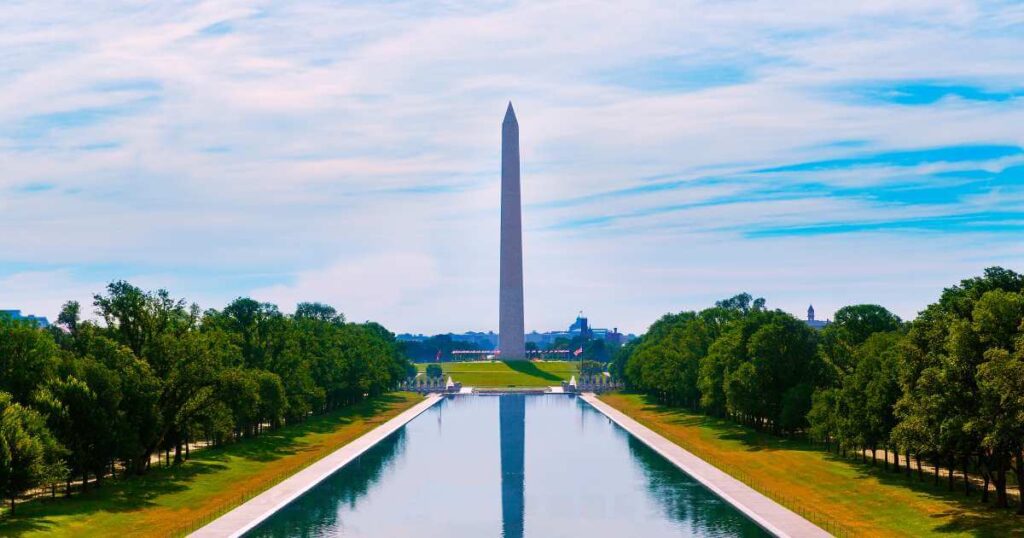
The National Mall is a large open park area located in Washington, DC and is the center of the majority of sites that most people visit during a visit to Washington DC. The Mall spans over two miles and is surrounded by many of the city’s most famous museums. At the center of the Mall stands the Washington Monument. From the Washington Monument you can see the Capital Building, the Lincoln Memorial and the White House. Numerous other memorials are found when exploring the area. The National Mall is also the site of many major events and demonstrations, including presidential inaugurations and the famous Martin Luther King Speech.
How to Explore the National Mall
The National Mall is a large area to explore. You can explore on your own, take a tour, get guidebooks or get an app. There are several hop on/hop off bus tours with frequent stops. Many of these tours have night options as well. Even with the bus tours, you will still do a lot of walking.
If you prefer to be closer to the ground but not on your feet there are also bike tours and Segway tours in addition to bike and scooter rentals that are stationed throughout the mall. Scooters may not be used on many sidewalk areas.
If you choose to walk most of the mall (which we did), you can pick up a public bus (DC Circulator) for $1 per person. It was really simple once we figures out the direction that the bus went. This bus can be used for smaller jumps or you can walk one way and take the bus back.
Guided tours are likely the best way to get immersed into the history. If you’re trying to stay on budget then apps and guidebooks are a great resource. You tube videos can also be a wealth of information.
Monument along the National Mall Include: The Washington Monument, WW2 Memorial, Vietnam Memorial, Einstein Memorial, Korean Memorial, Lincoln Memorial, Martin Luther King Memorial, Franklin D Roosevelt Memorial, & Jefferson Memorial. All are worth a visit.

Smithsonian Museum of American History
The Smithsonian Museum of American History is one of the largest and most comprehensive history museums in the world, located on the National Mall in Washington, D.C. The museum’s collections encompass more than three million artifacts and archives, covering the history of the United States from colonial times to the present day. Visitors can see famous artifacts such as the First Ladies’ Inaugural Gowns and the Star-Spangled Banner.
The Smithsonian Museum of American History was our favorite for learning about history. We unexpectantly spent hours in this museum (and ended up cramming in a late lunch in the cafeteria). Our favorite section of this museum was the Entertainment Nation. We found numerous talking points and a large amount of education material to explore. This museum is was not as crowded as some of the other museums on the mall which we really allowed us to enjoy the exhibits.
The lowest level of the museum contains the Spark Lab where kids can take a break from walking and work on experiments and hands on learning opportunities with a friendly staff. My only complaint is that I wish it stayed open later.
National Museum of Natural History
The Smithsonian Museum of Natural History features over 126 million specimens and cultural artifacts, including the largest gem and mineral collection in the world and the Hope Diamond. Visitors can explore the diversity of life on earth through interactive exhibits, dinosaur fossils, live animals, and cultural objects. The museum is also home to the Hall of Fossils, the Butterfly Pavilion, and the Ocean Hall, showcasing the beauty and complexity of our natural world.
The Smithsonian Museum of Natural History has a large amount of material that makes learning interesting, easy and fun.
Library of Congress
The Library of Congress is the largest library in the world. It was established in 1800 and has since grown to hold more than 167 million items, including books, manuscripts, photographs, maps, and sound recordings. The library serves as the research arm of the U.S. Congress, but is also open to the public for research and exploration. The library’s Main Reading Room, housed in the historic Thomas Jefferson Building, is a magnificent space featuring a dome ceiling and ornate details.
Visitors can also explore the exhibits in the Jefferson Building, including treasures from the library’s collections, such as original copies of the Declaration of Independence and the Gutenberg Bible.
The interior of the Jefferson Building is stunning and rivals many ornate buildings that we have explored in Europe. We also loved exploring some of the earlier books from Jefferson’s collection that are in the library (behind glass of course). Admission to the Library of Congress is free but a timed reservation is required. We were able to book it the day before but we were visiting in the slow season.

National Archives
The National Archives Building in Washington DC houses some of the nation’s most important documents, including the Declaration of Independence, the Constitution, and the Bill of Rights. It also contains millions of other records such as military service records, census data, and immigration and naturalization documents. The building itself is a stunning example of neoclassical architecture and features the Rotunda for the Charters of Freedom, a grand hall that showcases the three most important documents in American history. Visiting is free.
International Spy Museum
The International Spy Museum is a fascinating destination for kids who are interested in espionage. The museum features interactive exhibits, interactive games, and a variety of artifacts related to the world of espionage. Kids can learn about the history of spying as well as the technology used by spies today.
The International Spy Museum is a paid exhibit but was my kids favorite stop. I would expect to take around 2-3 hours for the stop but can be done faster.
National Air and Space Museum
This Smithsonian museum is one of the most popular attractions in Washington DC, and is very popular for for families with kids. The museum offers interactive exhibits, educational programs, and a range of family-oriented activities. Kids can explore the Wright Brothers’ first plane, the Apollo 11 command module, and the International Space Station. There’s also a 3D IMAX theater and a Planetarium where kids can learn about the universe.
During our trip the National Air and Space Museum timed tickets were required. In the spring and summer you may have to book ahead. We were able to book the day prior and get a 3pm slot. Much of the museum was under construction. This was our least favorite of our visit due to the crowds and limited available exhibits.
We really enjoyed the Write Brother’s exhibit and used that exhibit as a home school unit.
National Zoo
The National Zoo is one of the oldest zoos in the United States, and it offers a wide variety of animals for kids to observe and learn about. Kids can explore the Great Ape House, the Reptile Discovery Center, the Elephant House, and the Cheetah Conservation Station. The Zoo also offers educational programs and interactive activities for kids, such as a petting zoo, a carousel, and a bug house.
The zoo is not in the national mall area and is reached via public transportation.
National Gallery of Art
The National Gallery of Art is the perfect spot for families looking to explore the world of art. The museum features an impressive collection of artwork, including works by Rembrandt, Monet, and van Gogh. Kids can explore the galleries and participate in interactive activities, such as art-making workshops.
White House
Visiting the White House is a unique experience that allows visitors to see the most important residence and workplace of the President of the United States. Tours of the White House are available, but must be arranged in advance through a member of Congress. Visitors can explore some of the public rooms, including the East Room, the Blue Room, and the State Dining Room. The White House grounds also offer a chance to see the famous South Lawn, which is often used for public events and ceremonies. While visiting the White House, visitors can learn about the rich history of this iconic building and the important role it plays in the nation’s governance. The White House also offers educational programs and interactive activities, such as the White House Kids’ Corner, where kids can learn more about the history of the White House.

US Capitol Building
The US Capitol Building is a magnificent sight for families with kids. The building is home to the Senate and the House of Representatives, and kids can take a guided tour to explore the halls and chambers of Congress. Kids can also learn about the legislative process and the history of the building.
The US Capitol Building is the home of the United States Congress including the to the Senate and the House of Representatives. Visitors to Washington DC can take a guided tour of this historic building, which includes a visit to the Rotunda, the National Statuary Hall, and the Crypt. Tours of the Capital Building must be booked ahead of time. The building itself is a magnificent neoclassical structure with a dome that stands out as a landmark in the DC skyline.
Arlington
Arlington National Cemetery is a national military cemetery located just across the Potomac River from Washington, DC. It is the final resting place for more than 400,000 veterans and their families, including many of the nation’s most prominent military figures, such as John F. Kennedy and the Tomb of the Unknown Soldier. Visitors can take a guided tour or explore on their own, visiting notable sites like the Arlington House, the JFK Eternal Flame, and the Women in Military Service for America Memorial. The cemetery is easily accessible from DC via public transportation, making it a popular destination for tourists seeking to honor the sacrifices of America’s military heroes.

National Museum of African American History and Culture
The National Museum of African American History and Culture is a Smithsonian museum located on the National Mall in Washington, DC. The museum’s mission is to tell the story of African American life, history, and culture in the United States. Its collection includes more than 37,000 objects and artifacts, ranging from slavery and the Civil War to the Harlem Renaissance and the Civil Rights Movement. Visitors can explore the museum’s interactive exhibits, watch films and performances, and participate in programs and events. The museum provides an important space for education and reflection, giving visitors a deeper understanding of the African American experience and its impact on American history and culture.
The National Museum of African American History and Culture is a new addition to the National Mall, is free but may require timed reservations.
United States Holocaust Memorial Museum
The United States Holocaust Memorial Museum is located in Washington, DC and serves as the nation’s official memorial to the Holocaust. The museum was established to honor the victims and survivors of the Holocaust and to promote education and understanding about this tragic period in history. Visitors can view exhibits that cover the rise of Nazi power, the ghettos, concentration camps, and liberation, and also hear personal testimonies from survivors. The museum also offers various programs and resources to help visitors better understand the Holocaust and its lessons for humanity. Visiting the museum is a powerful and moving experience that serves as a reminder of the atrocities of the past and the need for vigilance against prejudice and hatred in the present.
Timed ticket reservations to the United States Holocaust Museum Memorial may be required for some exhibits.
National Museum of the American Indian
The National Museum of the American Indian is a Smithsonian museum located in Washington, DC. Its mission is to promote understanding and appreciation of the culture, history, and diversity of Native peoples of the Western Hemisphere. The museum’s collection contains over 800,000 objects representing indigenous peoples from North, Central, and South America. Visitors can explore the museum’s exhibits which feature art, history, and contemporary issues related to Native peoples, and also participate in various programs and events that showcase Native culture, including traditional music and dance performances. The museum offers a unique and valuable perspective on the history and culture of the Indigenous peoples of the Americas.
Fords Theater
Ford’s Theatre is a historic theater located in Washington, DC that is best known as the site of President Abraham Lincoln’s assassination in 1865. Today, the theater serves as a national historic site and a working performance space. Visitors can take a guided tour that includes the theater, the museum, and the Petersen House across the street, where Lincoln was taken after he was shot. The museum features exhibits on Lincoln’s presidency, the Civil War, and the events surrounding his assassination. Seeing a performance at Ford’s Theatre is also a popular activity for visitors to DC.
National Cathedral
The National Cathedral, formally known as the Cathedral Church of Saint Peter and Saint Paul, is a stunning and historic Episcopal church located in Washington, DC. The cathedral, which took over 80 years to build, features Gothic Revival architecture, soaring stained-glass windows, and intricate stonework. Visitors can take a guided tour to learn about the cathedral’s history and significance, as well as see the many beautiful chapels, including the Bethlehem Chapel where President Franklin D. Roosevelt worshipped. The cathedral also hosts concerts, lectures, and other events throughout the year.
The National Cathedral is also the sight of several historically significant events including Martin Luther Kings last sermon and tear gassing of protesters during Black Lives Matter Protests in 2020.
Visiting the National Cathedral is a unique and memorable experience for anyone interested in religious history, architecture, or art.
Hirshhorn Museum
The Hirshhorn Museum and Sculpture Garden is a Smithsonian museum located on the National Mall in Washington, DC. It is renowned for its modern and contemporary art collections, which include works by artists like Pablo Picasso, Jackson Pollock, and Yayoi Kusama. Visitors can explore the museum’s galleries, attend lectures and talks, and participate in special programs and events. The museum’s Sculpture Garden features a rotating display of large-scale outdoor sculptures, including works by Auguste Rodin, Alexander Calder, and Jeff Koons.
This museum has some interesting and discussion worthy art – it can take 1-2 hours and is near many other higher priority activities.
Smithsonian Castle, National Museum of Asian Art and National Museum of African Art
The Smithsonian Castle is a historic building located on the National Mall in Washington, DC, that serves as the headquarters of the Smithsonian Institution. Visitors can take a guided tour or explore on their own to learn about the history and mission of the Smithsonian.
The National Museum of Asian Art and the National Museum of African Art are located in the garden areas behind the castle. These museums offer an opportunity to explore the art, culture, and history of Asia and Africa, respectively. Visitors can view a wide range of exhibits and collections, including sculpture, textiles, painting, and ceramics. Each museum offers a unique and engaging way to learn about these important regions of the world.
The castle is closed in 2023 for renovations. Please see the Smithsonian Institution Building website for more information.
National Arboretum
The National Arboretum is a tranquil destination for families with kids. The arboretum features a variety of plants, trees, and flowers, as well as a variety of educational programs and interactive activities. Kids can explore the gardens, take a guided tour of the Arboretum, and learn more about nature and the environment.
O Street Museum
The O Street Museum Foundation is a museum located in the Dupont Circle neighborhood of Washington, DC. The museum is located in several connecting row houses and features a vast and eclectic collection of art, artifacts, and oddities from around the world, including items from over 60 countries. Visitors can explore the museum’s many rooms and hallways, which are filled with unusual objects, including antique furnishings, musical instruments, rare books, and fine art. The museum also offers guided tours that provide insight into the fascinating history of the building and its collections. A visit to the O Street Museum is a unique and memorable experience that can add a little whimsy to a Washington DC visit.

Overall, traveling to Washington DC can be a great choice for homeschoolers. With access to educational resources, historical sites, and cultural events, homeschoolers can have an amazing and educational experience while visiting the nation’s capital.