

The difficulty of finding learning disabilities and diagnosing learning differences like dyslexia, ADD, & ADHD in higher IQ and gifted children is a systemic problem in today’s education system. In most schools children must be failing or significantly behind grade level before they are given the supports that they need to be successful. It can also be really difficult to diagnose a child with higher IQ plus a learning disability since they may test normal or even above normal making a confusing picture. However, when dyslexia, ADD & ADHD are are not discovered and students are not given the tools to thrive, these students can start to struggle as material gets more complicated. These struggles not only lead to poor school performance but can also cause anxiety, depression and executive functioning concerns.
Through a unlikely and random Facebook comment when I asked for advice on phonics help for my middle guy, I’ve since discovered that all 3 of my kids have different degrees of learning differences. Finding out how their brain works has made a huge difference in their success in both traditional and home school.
Since then I’ve been really interested in reading and learning everything that I can about dyslexia and related disorders. I’d love to share our journey and what we have learned to help others on their journeys as well.
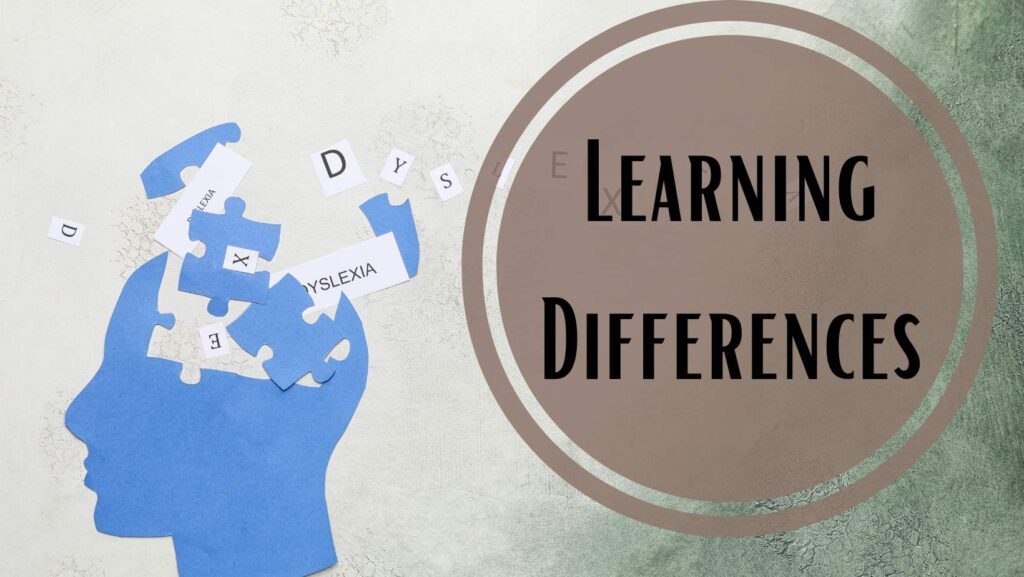
Dyslexia
Dyslexia is a neurological condition that affects an individual’s ability to read, write, and spell. It is typically diagnosed in early childhood and can have a significant impact on academic and social development. Dyslexia is the most common learning disability and affects up to 20 percent of the population. While it is a lifelong condition, early detection and intervention can help individuals with dyslexia to develop the skills they need to succeed in school and life.

Benefits of Dyslexia
Dyslexic thinkers can see the world in a different way. They may be creative and can be hard workers. The view of dyslexia is starting to shift from a negative to a positive (at least for some individuals). Many famous business owners and scientist credit their dyslexia as part of the reason for their success. Studies have shown that 40% of self made millionaires and 50% of NASA employees have dyslexia. When explaining dyslexia to others I like to start with the benefits of dyslexia first. I also love to list famous dyslexic thinkers.
One book I recommend to everyone who is learning about dyslexia is the Dyslexic Advantage.
Warning Signs of Dyslexia
The warning signs of dyslexia vary depending on the age and developmental level of the individual. In young children, signs of dyslexia may include difficulty with rhyming, delayed speech development, difficulty learning new vocabulary words, difficulty learning the alphabet, difficulty learning to read, difficulty with math, difficulty with writing, difficulty with telling time, and difficulty with remembering sequence of events.
In older children and adults, additional warning signs of dyslexia may include difficulty reading and understanding text, difficulty with spelling, difficulty with math, difficulty with written expression, difficulty following directions, difficulty with working memory tasks, difficulty with organizing and planning tasks, difficulty with handwriting, difficulty with interpreting nonverbal cues, and confusion with left and right directions.
The code phrase that makes my dyslexia spidey senses alert faster than any is “reluctant reader.” So many parenting books repeat variations of the phrase “kids that can – do.” Yes there are kids that are just not interested in a story (especially when distracted by so many electronics) but if your child truly is a reluctant reader I would consider testing to make sure there is not an underlying learning difference.
Other red flags for me I describe as a mismatch in intelligence and testing. Anytime something does not seem to match – look closer. Pay attention to the kid that keeps being labelled as needing to “try harder.” They may be trying very hard but having problems that are not being noticed because they are known to be intelligent but the work does not show it.
My oldest always scores really high on testing but writing if very difficult for her (confirmed with neuropsych testig). She’s not able to take notes. The difficulties were not visible until 5th grade and slowly got worse. She appeared to teachers (and me) as being lazy and not trying. Compared to her testing she was actually performing at a much higher level then she should have been. She was trying very hard and we did not realize it. Now that we know, she’s improving and her self esteem is better.
Mental Health signs of Dyslexia
Individuals with dyslexia may also display a range of behavioral characteristics with up to 30% also having a diagnosis of ADD or ADHD. Treating the attention disorder part does not help the dyslexia but can help someone concentrate more to work with the challenges of dyslexia. These difficulties can include difficulty focusing and paying attention, difficulty managing impulsivity, difficulty with emotional regulation, difficulty with social skills, difficulty with self-esteem, difficulty with organization, difficulty with time management, difficulty with multitasking, and difficulty with transitions.
As a PA I’ve met numerous patients that were struggling with anxiety that was a result of dyslexia that was undiagnosed. When people understand why things are not working as expected, they are able to better manage expectations and change work habits that work better with their brains.
Identifying warning signs of dyslexia early on is critical to providing timely intervention and support. It is important to remember that each individual with dyslexia is unique and may present with their own unique combination of signs and symptoms.
Dyslexia is a common learning disability that can have a significant impact on academic and social development. Warning signs of dyslexia vary depending on the age and developmental level of the individual, but may include difficulty with reading, writing, spelling, math, and other tasks. Behavioral signs of dyslexia may include difficulty focusing and paying attention, difficulty managing impulsivity, difficulty with emotional regulation, difficulty with social skills, difficulty with self-esteem, difficulty with organization, difficulty with time management, difficulty with multitasking, and difficulty with transitions. Early intervention and support are essential for individuals with dyslexia, so it is important to speak with a specialist if you suspect your child may have dyslexia.
ADD and ADHD
More people are generally more familiar with ADD and ADHD than dyslexia although these processes can be difficult to diagnose in some children. The difference in the two is the hyperactive symptoms – attention disorder with or without hperactivity. ADD is more difficult to diagnose especially in higher intelligence children who generally perform at grade level.
Signs of ADD & ADHD
ADD is a disorder that affects a person’s ability to focus, stay organized, and manage their time. Symptoms of ADD can vary from person to person, but common signs include difficulty paying attention, easily being distracted, impulsiveness, forgetfulness, difficulty staying organized, problems with completing tasks, and difficulty controlling emotions. People with ADHD may also fidget, have trouble staying seated, and have difficulty in social situations. They may also be prone to daydreaming and have difficulty following instructions. ADD and ADHD can also present with difficulty managing impulse control and emotions. Younger children may present with more emotional symptoms and less trouble with work. Children with ADD and ADHD may also be much more sensitive to criticism and have problems with perfectionism. ADD can negatively affect a person’s ability to succeed in school or work, and can lead to difficulty forming and maintaining relationships. Treatment for ADD usually includes medications, therapy, and lifestyle changes. With the right support and treatment, people with ADD can lead successful, fulfilling lives.
Gifted Children & 2e Children
Children with high IQ’s are often labelled as gifted. Sometimes it’s easy to spot a gifted child but other times when a child is both gifted and has a learning difference, the learning profile can be difficult. When material is presented in a way that these children can process the information, learning can be intense. When learning differences are not recognized and the children are labelled as lazy or difficult, school can be hard to manage. A child who is gifted but does not have any learning challenges may also do badly in school due to boredom. When a child is bored they may act out and loose focus. Teaching in a way these children learn is very important to their overall success. Having both a high IQ and a learning difference is what most people call 2e (twice exceptional). Finding and diagnosing these kids can be tricky if you’re not looking. Teaching in a way that challenges their strengths and supports their struggles is also not easy. Gifted children may also be ahead academically but behind socially which may make classroom placement hard. Adults may also have unrealistic social expectations with high IQ children.
How to Teach 2e kids
It’s complicated and to much for this article but please jump over to our world-school & home-school to see what has worked for us.

Every person on this planet is unique and it’s the differences and diversity that can be so beautiful about the human race. Differences and unique thinking also allow us to make advances in many fields. When we find out what makes someone different and teach on an individual level we all benefit. There are numerous other neurodiversities and each one has its challenges and strengths.