
Getting through the airport and figuring out how to manage car seats and booster seats while traveling can be tricky (as an understatement). Car seats are bulky, can be difficult to install, and can get lost or broken. However, we all want to keep our children safe and the most likely place they are to get injured is in a car. When deciding on the best car seat option for your traveling family there are many things to consider. We’ll start with all your options then the good and the bad about each. Scan down to find my recommendations for the best car seats and booster seats to keep your kids safe and make things a little easier.

Everything You Need to Know About International Travel with Car Seats & Booster Seats 2023
Travelling can make it more difficult to protect your family in car accidents for several reasons. One reason is that it can be really confusing when it comes to what to do with your car seats. It can also be a really big hassle to carry a car seat through and airport and public transportation. At home, our car seat is safely strapped in to one car and does not move. When we travel, we have to frequently change cars and carry our seat to all kinds of strange areas (like on a boat to a carless island in Costa Rica). For some travelers it is an acceptable risk to not be as cautious in other countries. For me, it’s not. Here are some of the problems I’ve encountered with car seats and travel as well as recommendations to make it a little easier
This website uses affiliate links for income and support. If you like our website please consider using these links. You will be directed to Amazon and we will get a small portion of your purchase at no increased cost to you.
What are the Big Concerns about Traveling with Car Seats?
Car Seats can be a big issue for travelers with kids. It’s a big pain in the rear to carry a car seat around. Not to mention I always feel that Taxi car drivers can give a little stink eye when you say “give me a few minutes to shove this thing in your car and attach all the straps.” Another problem is that different countries have different standards for car seats. That does not mean that either way is better it’s just usually a different way of getting the same results. The car seats approved in Europe are not the same as US seats which means legally you can not use your US seat here – that being said – who’s really going to check? In my opinion if you want to bring a seat with you go for it. It will be safer to use your US seat (attached properly) than no seat at all.
Different Cultures have Different Levels of Acceptable Risk and Safety Standards Vary Greatly between Countries
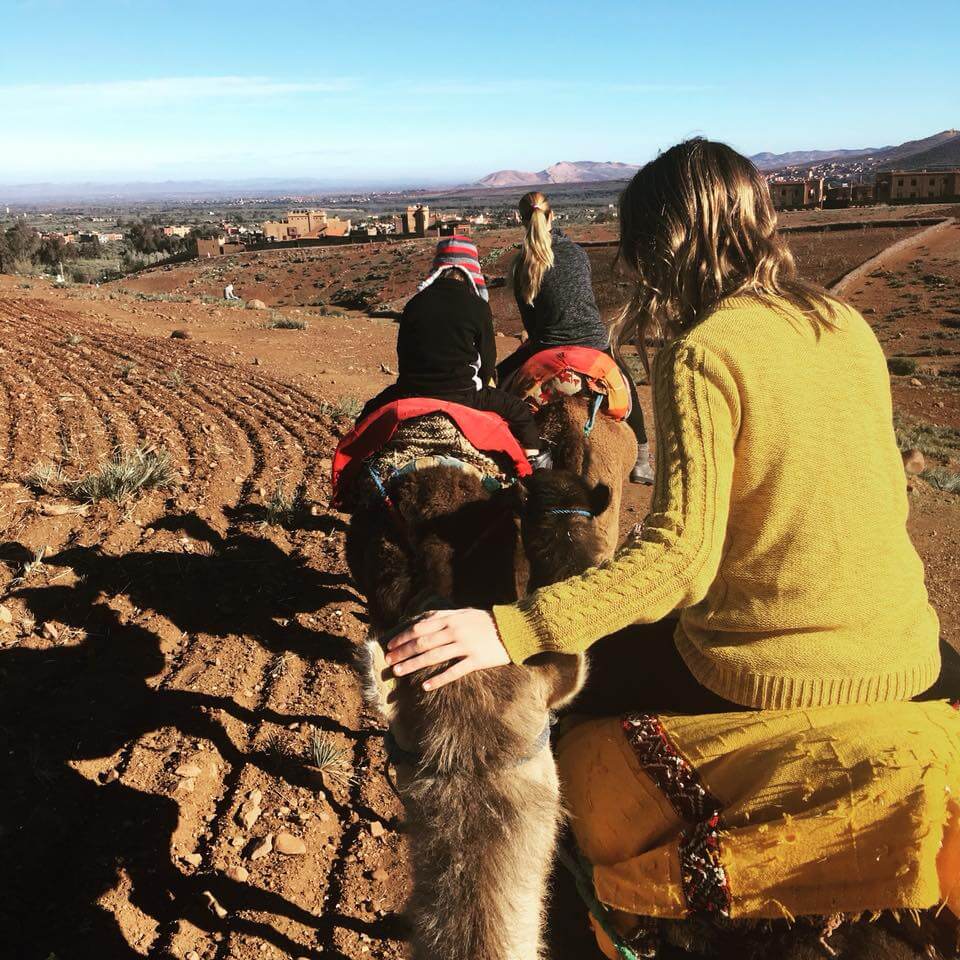
Safety standards and acceptable levels of risk are different between countries. In Costa Rica and Morocco it was common to have broken seat belts in Taxis. Those countries also had much more darting traffic and very loose standards for passing. The cars themselves were older and did not have as many airbags or other safety features that are now standard in the US. I am a seat belt fanatic. I would absolutely not get in a car that did not have enough belts for the kids but there were a few rides where R and I went without a belt and it stressed me out. I think you either have to be firm and stick with the having to have a seat belt for everyone or just trying to take a deep breath and go for it (I’m getting slightly better at the later). We did not get in any car where our kids did not have protection. That’s a hard no for me but in many areas of the world you may not have many options especially in taxi’s and public transportation. We carried our car seats everywhere – regardless of how ridiculous we looked.
Domestic Travel and Car Seats
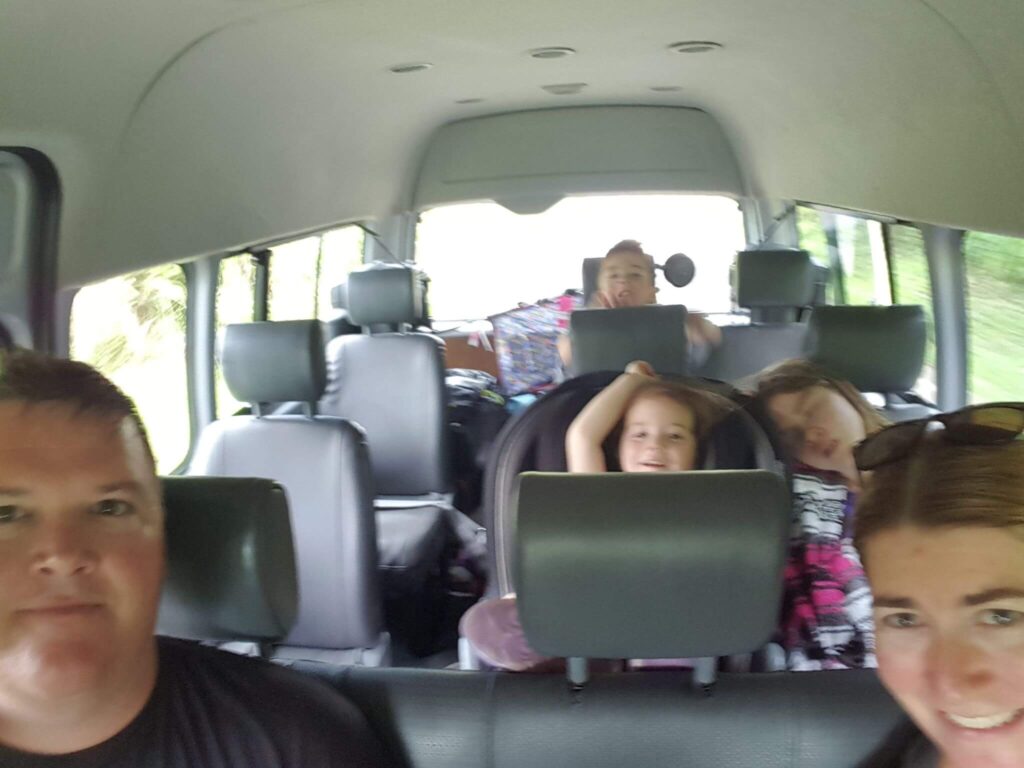
I have found that traveling domestically with a car seat is pretty easy once you figure out how to maneuver around the airport. We check any booster seats that are high back boosters (usually in a bag). We take our backless booster with us and place it in the overhead compartment. For the younger ones we attach our travel car seat to to a seat roller. This changes the car seat basically to a stroller that we use through the airport. For babies that are not lap babies and young toddlers we detach the roller and check it at the gate (or place it in the overhead compartment if there is room). We then carry our car seat onboard. The seat must be labeled as FAA complaint to be brought on the plane. Otherwise we check the car seat and maneuver through the airport with a small stroller that we check at the gate. All US rental cars should be able to fit your seat. Our preference recently is to travel just with carry-ons and we like to keep everything we need with us to avoid waiting at baggage claim and lost luggage.
How to get your Travel Car Seat through the Airport
Even if you get a more travel friendly, lighter car seat, getting through the airport can be difficult. If your baby is still in an infant seat – you can use your regular stroller attachment. Once our kids outgrow the infant seat, we generally will strap our seats upside down on our luggage to get to and from the ticket counter (or use our awesome car seat transporter).
I highly recommend a car seat transporter like the Brica Smart Move Car Seat Travel Cart for larger seats (this is the closest that I can currently find) We love ours and it made travelling so much smoother. It looks and acts like a hand truck. We attach our car seat to it and viola instant stroller. We used ours frequently until my youngest was 5. There are also several other choices such as car seat strapping. You can also use a stroller that attaches to your car seat. Gate check the stroller. This works well for babies still in an infant seat.
After you get to the airport ticket counter, you have several options.
Option 1 – If your child has their own seat and you are taking a carry on you can strap the seat upside down to your luggage and wheel it through the airport. If you have a stroller too and other kids your arms will get full fast. There are a few systems you can buy that help strap the seat to your luggage … or use a car seat transporter (see how much easier).
Option 2: If you have a lap baby or an older child who will not be needing their seat on the plane, you can check your car seat. Make sure you check and label all of the parts. I recommend getting a car seat bag. Checking car seats can be rough on the seats and increased chances that the seat will be damaged. I would recommend getting a cheap “travel seat” if you use this option vs your daily use seat so that your daily seat is not damaged.
Option 3: Take the seat to the gate by using the car seat transporter or strapping to a carry on. If there is room to take the seat on board (ask the gate agent), then do that. Most of the time we have been allowed to have our baby in a seat even if we just registered for a lap baby. Our children only flew on laps about 1/5 trips. If you choose this option you must be comfortable with the increased risk as a lap child.
If the plane is full then your seat will be gate checked. Drop off and pick up the seat just before and after you get on the plane. Make sure you have the correct gate check ticket from the gate agent. This works best when you have a car seat transporter or stroller that attaches to your seat. I usually leave them attached if I am gate checking both (but I tag them separately). If I am just gate checking my car seat transporter then I remove it just prior to getting on the plane – those last few feet of carrying that seat down the isle of the plane is rough.
I also check strollers at the gate. One of our strollers was sent to a different plane via gate check (at 1 am in Atlanta – after the airport train closed – that was fun). We have also had a lost car seat via gate check. The airport will need to furnish some sort of seat for you if they loose yours.
Our current preference is to avoid gate checking or baggage checking as much as possible. Loosing luggage is not fun and neither is waiting at baggage claim with exhausted kids and parents. We have had times where the baggage claim wait was an hour especially since car seats seem to come out last.
Want to save this info for later or share? Here are some easy pins to share …


International (Europe) Travel and Car Seats
This article will focus mostly on Europe but you’re likely to have the same concerns regardless of where you are traveling. Europe and some other area have different standards for car seats so please remember to do your research. There are several options for the international car seat travel dilemma.
1) Purchase a Seat in Europe
If you are going to be in Europe for a while, you may consider purchasing a seat when you get here – sounds easy enough, right? Well … may be not … Our first month in Europe we were in Copenhagen. We travelled by train and buses our entire stay but we needed a car seat for the next part of the trip. Unfortunately we found out car seats are really, really expensive in Copenhagen. I checked online prior to leaving for average European prices for seats and found really reasonable seats (less than $50). When I really needed to get one, we could not find anything under $150 and those were crazy bulky. We ended up buying one off of Denmark’s version of Craigslist (which is not how I recommend buying a seat but we needed something). The other issue regarding buying a seat during travel is actually getting to the store to buy the seat without a car seat. So something so simple gets complicated fast. It made me miss Target – a lot (but we found a solution and got over it).
2) Bring your Own Car Seat
A second option – You can just ignore the car seat laws and bring your US seat. This is probably the best option for most people because you will always have a seat with you. I don’t know what the fine would be but I would think it unlikely that you would get in too much trouble. Many people who travel will leave their expensive seats at home and buy a car seat just for travel. Car seats can be beat up being transferred to and from the plane and buying a different seat for travel will make sure your daily seat stays in good shape. This is what we do now.
This is probably a safer option than our – we can’t find a car seat Craigslist search – but make sure you are installing the seat correctly. I would make sure you have and know how to use a seat belt clip with your seat prior to your trip. Cars in different countries may not have self locking seat belt. Also seats in the US use a different type of anchor than European anchors (called Isofix – we use latch anchors in the US) so they likely will not be interchangeable. You may need to use the belt to set the car seat and you may have to use the clip if the seat belt does not ratchet. Cars in Europe older than 2013 may also not have a top tether. US seats have a chest clip while European seats are supposed to have a 1 click release. I personally found that having just one clip meant my 3 year old spent a lot of time wiggling out of the thing. Read here for more information on the safety standards and differences of each area.
3) Use Public Transportation
Most cities in Europe have fabulous public transportation options. In many cities you can get everywhere you need by bus, train ,bike and walking. If you are staying in one of those areas then you do not need a car seat. If you have to take an occasional cab – then consider some of the hybrid options I have below.
4) Rent a Car Seat
Most car rental companies will also rent a car seat. For short trips this is probably the easiest way to go. For longer trips this can get expensive fast. Also some seats may not be in the best of shape. I’ve heard of expired seats in rental cars as well so make sure you take a good look at seats that you rent from car companies.
Car Seat Travel Concerns per Age
Lap Babies under Age 2 and Infant Car Seats:
Lap Baby Safety
In the US and most other countries it is legal for children under 2 to travel as a lap baby. However, buying a seat for your baby and taking your car seat aboard is the safest (and generally most convenient). If you can afford the extra ticket I recommend getting one. Having your child in their own area and safe can make a trip much more enjoyable. Turbulence can occasionally be sudden and cause a child to leave a parent’s arm and be thrown forward. The seat protects from sudden turbulence.
Traveling by plane is always safer than driving. If purchasing a seat would break your budget then traveling with a lap baby will be safer than driving. I tend to be more anxious when I try flying with a lap child so we almost always buy a ticket. There have been a few times that the extra ticket made the difference from canceling the trip so my kids traveled on laps then. However most of the time we are able to find cheap tickets so the price is worth it to us. Plus I find that it’s nice forbaby to have his/her own space. My children were used to their seats from the morning daycare drive so it was comforting for them to have their own seat on a plan. My kids slept well in their seats and I can take a potty break without waking everyone up.
What to do with an infant car seat on a plane
If your child is flying as a lap baby, you have several options for your car seat.
Option 1: Check the seat at the ticket counter then use a stroller or baby carrier to maneuver through the airport. Check the stroller at the gate.
Option 2: If you have room for a stroller/car seat combo then leave take the combo to the gate and you can check your car seat and the stroller at the gate.
Option 3 (has worked for me a few times): If the plane is not full, some airlines will allow you to still take your seat aboard. We have done this several times. I’ve even checked a few days ahead of time and if the flight was getting booked, I’d go ahead and purchase a seat. I confirm the policy with the ticket counter and the gate agent.
What to do with the base of an infant car seat when flying.
If you have an infant car seat carrier you may want to check the base of the carrier at the ticket counter or if the plane is not completely booked you may be able to place the base in the overhead compartment. You do not use the base in the seat. Some seats are approved for car use without the base. Some are not. Please check with the manufacturer or your specific seat for information about using the seat with the base. Here’s a video on how to install an infant carrier without a base (they can be reverse facing).
Can I use my Infant Car Seat on the plane?
All car seats that are approved by airlines in the US will have an FAA approved sticker on the seat. Be sure to look for that sticker prior to flying. I have found that flight attendants always check for that sticker.
How to use an infant car seat on a plane.
Car seats must be attached with the lap belt system on the plane. Generally most seats have a slot or loop that the belt fits under to hold the seat secure. The belt will end up in front of the baby. If you’re unsure how to use the belt with your seat this video may help.
Can I use my car seat without the base when I land?
You will need to check your manufacturer’s recommendations and specific country rules. Most infant seats can be used without a base. There are 2 basic types of installation. If your car seat is set up to be installed by European method/standard it may be a little safer. The US method/standards may allow more movement of the baby in a crash. Check your manufacturer instructions for the correct method. Travelling with a base adds one more bulky think to take care of so being able to take just the seat can make travel easier. Also the base of the seat will be transported in checked baggage which could cause damage to the base.
Other features to look for in a good Infant Car Seat for Travel:
Generally it’s good to find car seats with lots of room to grow. However, if you will be travelling a lot then go for a lighter weight seat that is easy to carry (with a good safety history). It’s also nice to have a seat that fits with your stroller system. Usually I avoid lots of bells and whistles. Small and not complicated is better.
At this time I would recommend the Britax B-Safe Gen2 Flexfit Infant Car Seat because it also has a European belt path which should make travel to other countries easier.
Other tips for airline travel with a lap baby
Try feeding while going up and down in elevation
In the US you can not have your child attached to you during take-off or landing. I love Moby Wraps for travel but you will have to unstrap the baby during take off and landing (I don’t get the mechanics of that)
Some European flights use a belt system or bassinets for babies, check with your carrier before your flight.
Review several methods for installation prior to travel especially without the base. Instructions here.
Change babies in the restroom, not in your seat
Kids in a rear facing or forward facing 5 point harness (ages 1-5) – Travel Car Seats for Toddlers
Children ages 1-3 should still be in a rear facing 5 point harness when available. The AAP (American Academy of Pediatrics) recommends children stay reverse facing as long as possible – until they reach the height and weight restrictions of the chair.
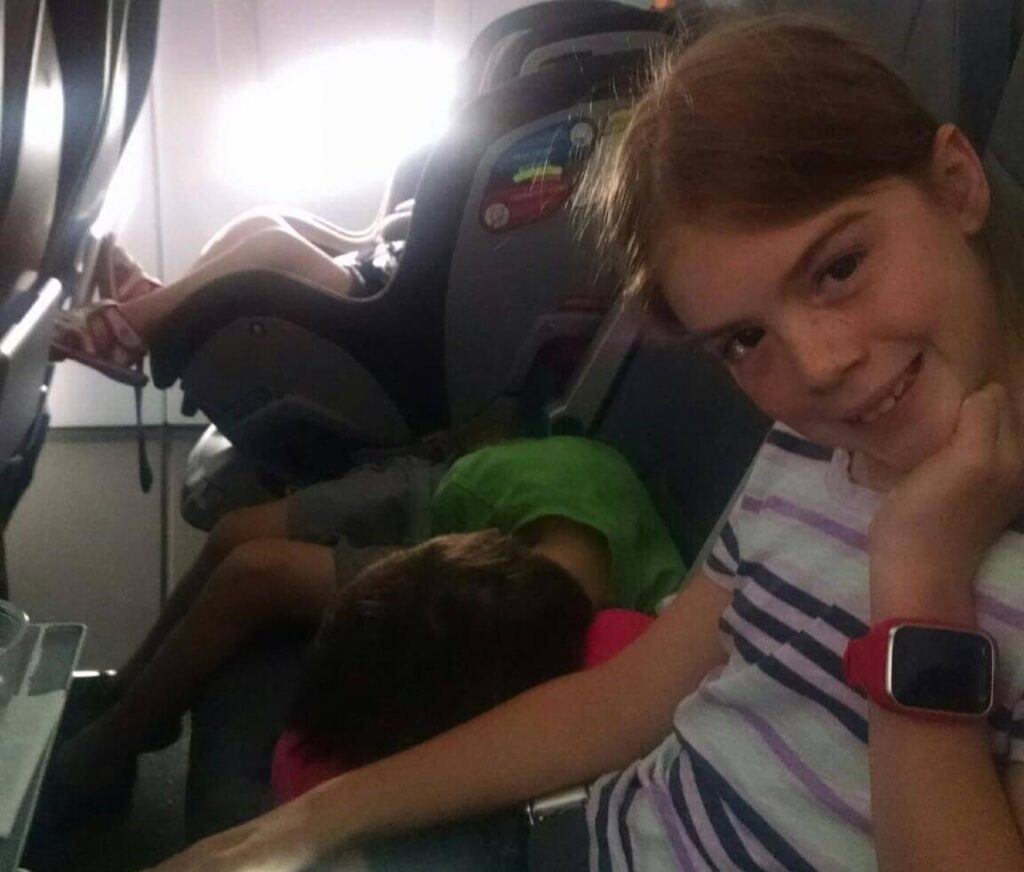
When your child outgrows the infant seat they move up to a rear facing 5 point harness. The basics or airplane travel with a full child safety seat are similar to the infant seats. Always confirm that your seat has a sticker that states it is approved for air travel by the FAA – they will check. The seat will need to be installed forward facing (regardless if you use forward facing or rear facing in the car). Check specifics with your specific car seat instructions prior to flying. If you travel a lot then consider getting an inexpensive car seat just for travel (and grandma’s house). Getting an extra seat helps decrease wear and tear on your primary seat. Car seats get a little beat up in the travel process and I don’t like the thought of my kids daily drive seat possibly being damaged.
Once you have your seat on the plane it’s generally easy to install a seat. Now getting the seat to the plane – that’s a little trickier (see hints mentioned above). This age is when a car seat transporter and car seat bag can be really helpful.
What to look for in a Travel Car Seat Toddler and ages 1-4
- Seat can faces back and front (so can be rear facing in the car)
- Narrow and not bulky
- Light-weight and easy to transport through the airport and through hotels
- Sturdy and not easy to break when moving seat
- Easy Installation
Recommended Travel Car Seats ages 1-4
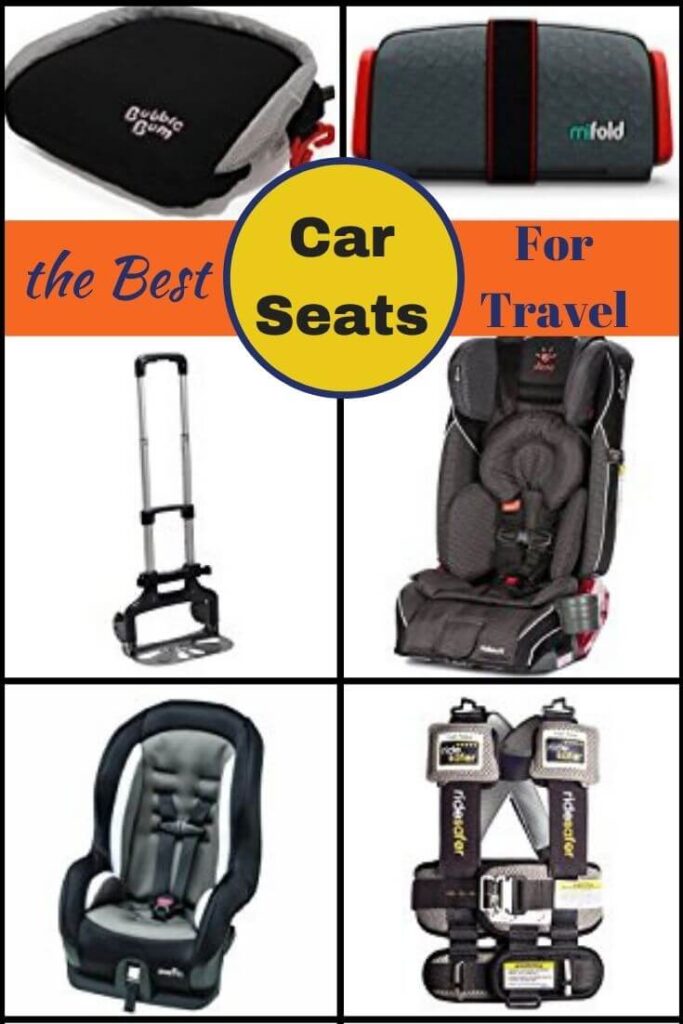
The Cosco Mighty Fit 65 DX Convertible Car Seat
The Cosco line of car seats are great budget options that are easy to transport and nice on the pocket book. This is an affordable lightweight seat. It makes a great choice if you’re on a budget and looking for a seat to use just for travel.
Diono Radian 3R, 3-in-1 Convertible Car Seat
The Diono Radian series of car seats are not cheap but they are tough. This is the seat we used for years. It folds to a manageable size but it’s heavy. The steal frame adds an extra layer of durability that I really like. Another benefit – you can fit 3 across in most cars. I do feel this seat is tricky to install in reverse mode. It’s not my favorite for infants.
Graco SlimFit 3 in 1 Car Seat
There are several good choices on the Graco Seat line. This one also functions as a booster seat. The car seat is approved on planes on 5 point harness mode but if you end up in a situation where you can not attach it as a 5 point harness (like in a taxi) it can easily switch to booster mode.
Your Home Car Seat
I do prefer to get a different car seat for travel but you can also use the seat you already have. Make sure you check with your airline to confirm that it is in the recommended range (usually around 16 inches but can be up to 20 for some airlines). You do risk additional wear and tear and damage to your home seat. We’ve taken numerous seats on planes but the above seem to be the easiest.
Booster Seats for International Travel
Per the AAP children should be forward facing until they outgrow their forward facing car seat height and weight restrictions. Once they out-grow the forward facing 5 point harness they transition to a booster seat until they are 4 foot 9 inches (usually over 8 years old). Booster seats position the belt lower on the hips and away from the abdomen in cars. High back boosters are generally recommended over just the bottom unit. Boosters are not used on a plane. There are a few options for products to use on a plane to add an additional layer of safety. We generally just use the lap belt on the plane at these ages.
What to look for in a Travel Booster Seat
- Light-weight, not bulky and easy to transport
- Sturdy and not too many separate pieces
Special concerns about traveling with a booster
- You will need to check your booster at the airport check in counter if a high back booster
- Label all parts
- Consider getting a car seat bag so no parts are missing
- Pick the Booster up at the oversized baggage counter
Recommended Car Seat / Booster-like options and Restraints while on the Plane
When your child is outgrowing the car seat on an airplane stage but still needs a little extra support, these options are a good choice.
WAYB Pico Travel Car Seat
This seat is the ultimate travel seat for those that are able to spend more. The seat is made to fold and is easy to carry so that you can keep your kids safe while decreasing car seat hassles.
Cares Airplane Harness
This device is for use on an airplane when a child would typically use a booster seat. It can help super wiggly children be more secure. The top does wrap around the seat and I have heard that occasionally it can interfere with the TV or tray of the passenger behind the child. We generally went from a car seat to just using the lap belt. For longer flights the car seat was better about allowing our children to sleep more comfortably and once they outgrew the car seat I just didn’t see that the Cares Harness would protect more against turbulence.
Recommended High Back Boosters for Car Travel
Evenflo Big Kid Amp High Back 2-in-1 Belt-Positioning Booster
Any basic booster will work for travel. I like this one for being lightweight, not bulky and sturdy.
WAYB Pico Travel Car Seat
Expensive! but a great concept for travel. If budget is not a concern this seat is a good option.
Hifold fit-and-fold highback booster Seat
The Hifold Fit and fold Highback is a hybrid between a full booster seat and a folding alternative. It folds to a smaller travel size than typical boosters and can make a great compromise for travel.
Booster Seat Alternatives for Travel
If carrying a full booster is not a good option than consider these great choices for portable and compact travel car seat and travel booster seats. These are excellent choices for pre-school kids especially if you will not be driving much but will be in Taxi’s for a short time. These booster alternatives are also good when you just can’t figure out how to take a full seat. We’ve had times where a seat just won’t fit. We used a Bubble Bum for a large part of our trip for my 6 year old. We could fit it in our day bag and it gave us the freedom to choose many different types of transportation. I also really like the idea of the ride safer vest (if my budget was a little higher).
Bubble Bum Backless Booster
The Bubble Bum Backless Booster is a great booster seat for travel. It is small enough to pack in a bag and we use it for our 6-year-old. It’s not going to be as safe as a full high back booster but if a high back booster is not a reasonable option then this it’s a really good, easy alternative. If you have a super wiggle youngster then you will need to keep checking to make sure it stays in the correct place but that’s going to be the case for any booster. We’ll likely also use this for when our kids are traveling with friends when we return home. It auto-inflates which means you don’t have to worry about your youngster deflating the seat on the road.
Ride Safer Travel Vest
I would have loved to have gotten a Ride Safer Travel Vest for our travel year. They are compact and seem safer than other options that are easy to pack. Please see ridesafer’s website for safety information. The down-side: the cost. They also are not approved in all areas but for cabs they seem like a really good option.
Mifold Comfort Grab-and-go Car Booster Seat
The MiFold it probably the most compact and easy to use of the backless booster options. This would fit well in a day pack and is probably one of the best options for a day of museum hopping (and a safe cab ride back home).